Mailscale Alternative & Review
Mailscale reviews explained: Reddit, Trustpilot, ratings, pricing, pros, cons, buyer concerns, and whether it is worth using for cold email.
Key Takeaways
- Mailscale offers SMTP mailboxes with shared IPs and all the basic features.
- Maildoso provides SMTP and Google Workspace mailboxes starting at $0.49, achieving high deliverability through automated IP rotation and self-healing mailbox technology.
Mailscale Review
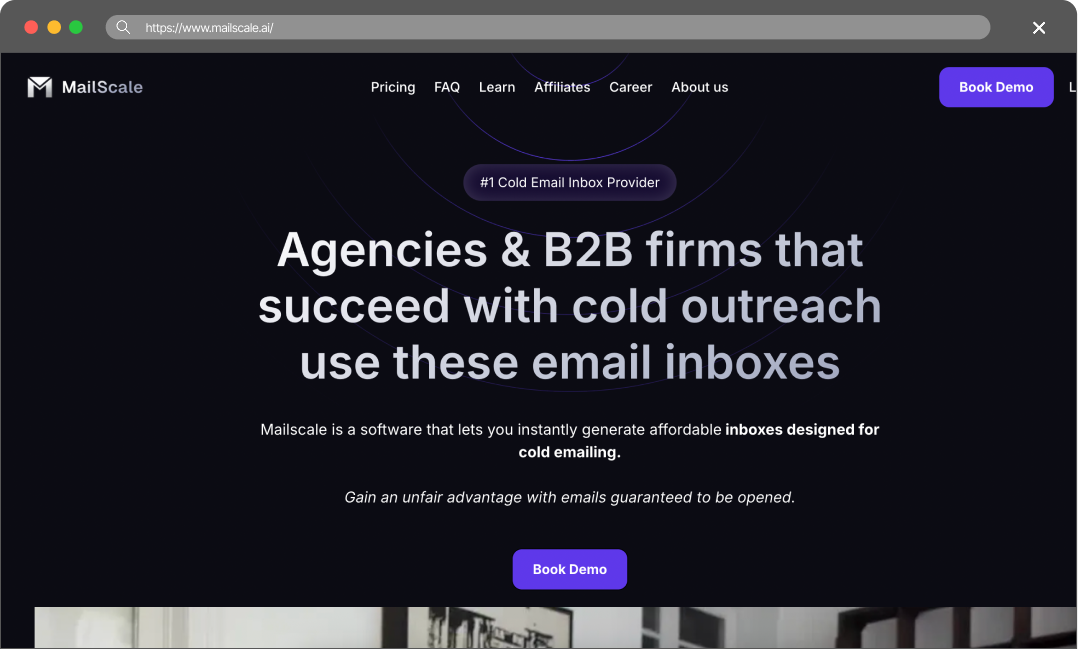
Mailscale reviews explained: Reddit, Trustpilot, ratings, pricing, pros, cons, buyer concerns, and whether it is worth using for cold email.
Rating & Reviews
Do not use MailScale. Service and support is garbage. They have poor infrastructure and my domains were continually down every few weeks which caused disruption.
— user review
MailScale and Mailreef are decent too, but for real multi-domain volume, Maildoso’s rotation and ramping logic holds up better._
— user review
Pros
- Minimalist, Fast Setup: The platform is built for speed; you can order SMTP slots and get credentials generated almost instantly without navigating a complex UI.
- Lean Resource Usage: Because it is a “no-frills” SMTP play, it doesn’t have the bloat of traditional office suites, making it very lightweight for simple campaigns.
- Volume Discounts: They offer even lower per-mailbox rates for users who commit to extremely high quantities of SMTP slots upfront.
Cons
- Aggressive Default Limits: Their 50-email-per-day recommendation is risky. In the 2026 email environment, this volume from a new SMTP server often triggers spam filters much faster than a conservative approach.
- Lack of Provider Diversity: Mailscale is strictly an SMTP provider. If your strategy requires high-authority Google Workspace accounts or a hybrid mix, you will have to manage multiple tools.
- Weak IP Resilience: Relying on shared or static IP pools means your deliverability is at the mercy of the “neighborhood.” If a few users burn the IP range, your campaigns suffer without automated rotation to save you.
- Hidden Pricing (Mandatory Demo): Their rates aren’t listed publicly. You’re forced to jump through the hoop of a sales demo just to see the actual pricing, which adds unnecessary friction and delays your setup.
Maildoso Review
Maildoso is an outbound infrastructure provider built around dedicated IPs, white-glove deliverability onboarding, and a flat per-mailbox model with no per-account cap. It is designed for sales and demand-gen teams that need predictable inbox placement at scale without operating their own mail servers.
Maildoso Pros
- Dedicated IPs from day one — no shared-pool contamination from neighbouring senders.
- White-glove onboarding with deliverability engineers; SPF, DKIM, and DMARC configured for you.
- Flat per-mailbox pricing with no monthly send cap and no per-account markup.
- Direct support from a team that operates mail infrastructure, not generic ticket triage.
Maildoso Cons
- Higher entry price than shared-IP services aimed at single-mailbox use.
- Designed for teams sending at scale; overkill for one or two mailboxes.
Detailed Pricing Comparison
| Mailbox type | Price per mailbox | Minimum package |
|---|---|---|
| Maildoso SMTP | $0.49-2.5 | $25 |
| Maildoso GW | $2.7-4 | $40 |
| Mailscale | $1.25-5.3 | $79 |
Feature Comparison Table
| Feature | Maildoso | Mailscale |
|---|---|---|
| Mailbox types | SMTP, GW | SMTP |
| IP type | IP rotation (best for deliverability) | Shared (lowest performance) |
| API access | Full access | Not mentioned |
| Self-healing mailboxes | ✅ | ❌ |
| Support | Email, Chat, Slack, Tech Audits | No info |
| Refund policy | 30-day guarantee | Strictly no refunds |
| Trials | 300 mailboxes for 30 days | ❌ |
| Final rating | ⭐⭐⭐⭐⭐ | ⭐⭐ |
Cold outreach breaks when infrastructure breaks. A campaign can have strong targeting, clean copy, and good sequencing, but if the mailboxes are weak, the result is still spam placement, account churn, and stalled pipeline. The problem becomes more expensive at scale because every burned mailbox can mean lost warmup time, new DNS work, reconnecting sequencers, and replacing domains.
This comparison looks at Mailscale and Maildoso as infrastructure providers for teams that need outbound-ready mailboxes. The focus is practical: pricing, mailbox types, IP approach, recovery options, support, refund visibility, public reviews, and what each provider is best suited for.
Key Takeaways
Mailscale Review
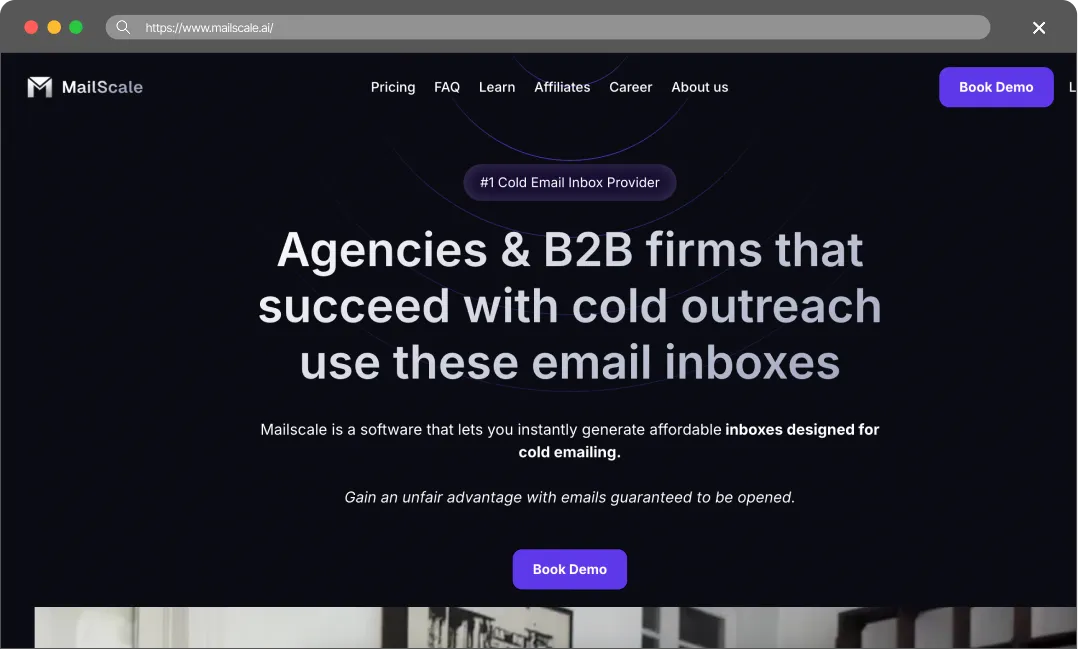
Mailscale is a specialized SMTP mailbox provider that focuses on keeping the cost per mailbox as low as possible. Founded in late 2023 by Yassin and Mo, the platform was born out of frustration with expensive Google Workspace seats. They are great for solo founders on a shoestring budget, but there’s a catch: their focus on cost-cutting means a more limited feature set and higher technical risks. First, their recommended volume of 30-50 emails per day is quite aggressive for SMTP-only setups, often leading to fast blacklisting. Second, they lack hybrid support for Google Workspace environments and have limited API features for serious agency-wide automation.
While Mailscale focuses on the bottom dollar, Maildoso offers total scalability and reputation protection, ensuring the infrastructure perfectly matches campaign requirements without sacrificing your long-term deliverability.
The True Cost of Bad Deliverability
It’s tempting to choose a provider based solely on the lowest price, but budget infrastructure often leads to hidden costs. When deliverability drops, the consequences usually show up in three areas:
- Burned Leads: High-quality B2B data is expensive. If emails land in spam, those contacts never see the pitch, and the budget spent on data is lost.
- Damaged Domains: Fixing a domain flagged by spam filters can be a massive headache. Often, it’s easier to just buy a new one and start the warm-up process all over again.
- Missed Revenue: Every missed inbox is a missed meeting. In B2B sales, losing even one connection can mean missing out on thousands in closed revenue.
Cold email infrastructure is better viewed as an investment. Maildoso provides the technical tools to protect domain reputation and help keep emails in the primary inbox.
Final Thoughts
We have carefully reviewed Mailscale, and to be honest, we are left with mixed impressions.
At first glance, everything looks fine, but if you dig deeper, you notice that:
- They use shared IPs.
- There is no public pricing. To start using the product (or to even find out the prices), you have to get on a call with their sales team—which is the only such case among the 40+ providers we reviewed.
- There are no positive mentions on Reddit.
Consequently, we can say that the product offers all the basic features—automated mailbox creation, full DNS record configuration, and domain management—but nothing more. Meanwhile, many other providers offer built-in warmup features, deliverability tests, dedicated IPs, API access, and various mailbox types (beyond just SMTP).
Our verdict: You can give them a try, and there’s nothing inherently wrong with doing so. Based on what we can see, the product has all the essential features needed to launch cold outreach campaigns.
However, we also suggest that you consider other options—ranging from more budget-friendly alternatives to more advanced solutions.
FAQ
Is Mailscale worth it in 2026?
Mailscale is a credible budget-tier SMTP provider for solo founders or small teams testing cold outreach on a tight budget. The trade-offs are shared IPs without automated rotation, aggressive send-volume recommendations (30-50 emails per day) that can trigger spam filters quickly, no Google Workspace support, and no public pricing — you must book a sales demo to see the numbers. If your campaigns are small and you accept manual DNS and IP risk, Mailscale can launch outreach cheaply; teams that need higher deliverability resilience, hybrid mailbox types, or transparent self-serve pricing should evaluate alternatives.
How much does Mailscale cost, and why is pricing not public?
Mailscale’s per-mailbox price falls in the range of $1.25 to $5.30 depending on plan and volume, with a minimum package starting around $79. The company does not publish pricing on its website — to see the actual rates you have to book a sales demo, which is unusual for an SMTP-only product in this niche. This adds friction to evaluation, so the safest approach is to request the demo and ask for the full price list upfront before committing to any package.
Mailscale vs Maildoso — which one fits my outbound stack?
Mailscale is SMTP-only with shared IPs, no automated rotation, recommended send volumes of 30-50 emails per day, no public pricing, and strictly no refunds. Maildoso offers both SMTP and Google Workspace mailboxes starting at $0.49, with dynamic IP rotation, self-healing mailbox technology, public pricing, and a 30-day money-back guarantee.
Does Mailscale offer a free trial or refund?
No. Mailscale does not publish a free trial and operates under a strict no-refund policy once mailboxes are provisioned. Combined with the absence of public pricing and the requirement to book a demo before purchasing, this means there is no risk-free way to test the infrastructure ahead of payment. If you decide to proceed, the safest approach is to start with the smallest available package and validate deliverability on a controlled batch of domains before scaling.