Frostmailer Alternative & Review
Frostmailer reviews explained: Reddit, Trustpilot, ratings, pricing, pros, cons, buyer concerns, and whether it is worth using for cold email.
Key Takeaways
- FrostMailer is positioned around Azure, Google Workspace, and SMTP mailboxes with SPF, DKIM, and DMARC preconfigured and mailboxes ready within 24 hours.
- Maildoso is stronger when the team wants SMTP plus Google Workspace, IP rotation, API access, and mailbox recovery. Maildoso publishes SMTP and GW plans, SMTP + GW bundles, self-healing mailboxes, inbox placement checks, API documentation, and a 30-day money-back guarantee.
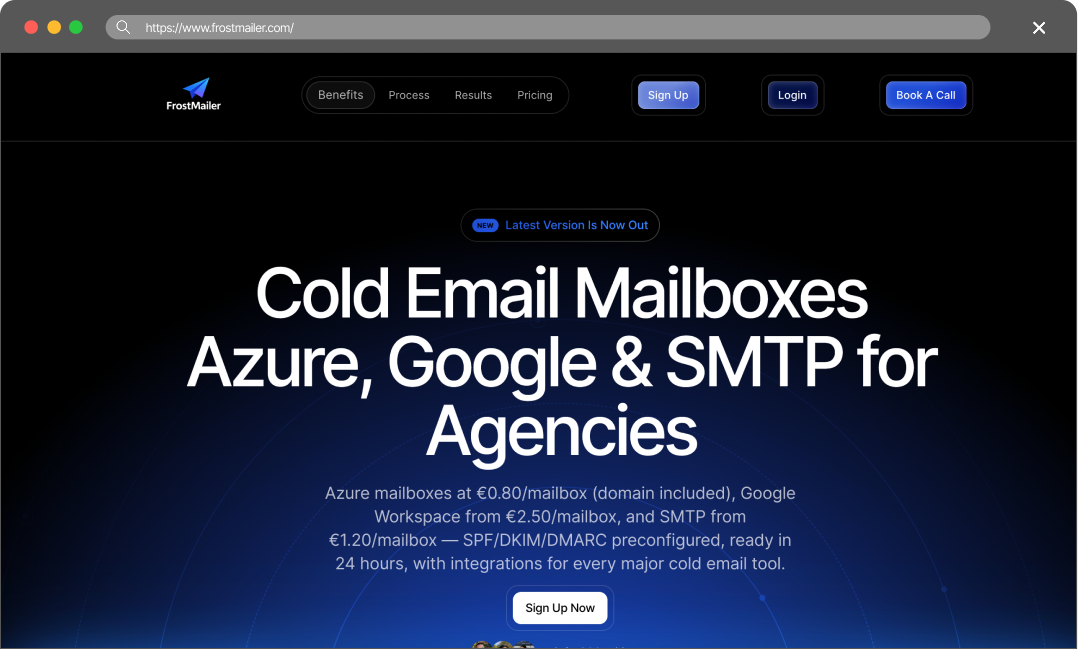
- FrostMailer has aggressive Azure pricing. The official homepage lists Microsoft Azure Tenant mailboxes at €0.80 per mailbox, with 100 mailboxes and a domain included in the tenant package – but because you can only send 2 emails per day, the benefit of the low price is completely negated.
Frostmailer Review
Frostmailer reviews explained: Reddit, Trustpilot, ratings, pricing, pros, cons, buyer concerns, and whether it is worth using for cold email.
Rating & Reviews
I’ve tried frostmailer and Winnr for inboxes, both shit lol. Right now trying inboxkit (GWS accounts), so far having similar issues.
— user review
Pros
- Multiple mailbox types. FrostMailer offers Google Workspace, SMTP, and Microsoft Azure mailboxes, which gives buyers more choice than single-ecosystem providers.
- Low Azure price. The Azure Tenant plan is listed at €0.80 per mailbox, with 100 mailboxes, domain included, SPF/DKIM/DMARC, a two-week warmup, and 24-hour readiness (but because you can only send 2 emails per day, the benefit of the low price is completely negated).
- Hands-off setup. FrostMailer emphasizes done-for-you DNS and mailbox configuration, which can reduce operational burden for agencies that do not want to manually configure authentication at scale.
- SMTP minimum is low. The Standard SMTP Inbox plan lists a minimum order of 3 inboxes, making it easier to run a small test before committing to a larger setup.It is worth clarifying that three mailboxes are not enough to achieve any significant results in outbound. With only three mailboxes, you’ll be limited to sending about 250 emails per week, which will likely result in only 1–2 positive replies.
Cons
- 🔴 Refund and trial terms are not clearly disclosed. The checked official homepage did not expose a clear money-back guarantee, refund policy, or free trial terms comparable to Maildoso’s public 30-day guarantee.
- Azure daily sending is very low. The Azure Tenant plan states up to 2 emails per inbox per day, which means teams may need a large number of mailboxes for meaningful campaign volume.
- Reddit signal is negative. The direct Reddit experience found during research was unfavorable, and no broader set of verified Reddit success stories was found in the checked sources.
Maildoso Review
Maildoso is an outbound infrastructure provider built around dedicated IPs, white-glove deliverability onboarding, and a flat per-mailbox model with no per-account cap. It is designed for sales and demand-gen teams that need predictable inbox placement at scale without operating their own mail servers.
Maildoso Pros
- Dedicated IPs from day one — no shared-pool contamination from neighbouring senders.
- White-glove onboarding with deliverability engineers; SPF, DKIM, and DMARC configured for you.
- Flat per-mailbox pricing with no monthly send cap and no per-account markup.
- Direct support from a team that operates mail infrastructure, not generic ticket triage.
Maildoso Cons
- Higher entry price than shared-IP services aimed at single-mailbox use.
- Designed for teams sending at scale; overkill for one or two mailboxes.
Detailed Pricing Comparison
| Mailbox type | Price per mailbox | Minimum package |
|---|---|---|
| Maildoso SMTP | $0.49-2.5 | $25 |
| Maildoso GW | $2.7-4 | $40 |
| FrostMailer GW | €2.5-3 (~$3-3.5) | Not specified |
| FrostMailer Azure | €0.8 (~$1) | ~$100 (1 domain included) |
| FrostMailer SMTP | €1.2 (~$1.4) | ~$4.2 |
Feature Comparison Table
| Feature | Maildoso | Frostmailer |
|---|---|---|
| Mailbox types | SMTP, GW | GW, SMTP, Azure |
| API Availability | Full access (on all plans) | Limited access |
| IP type | IP rotation (best for deliverability) | Shared for SMTP, US-based for GW |
| Self-healing mailboxes | Support | Email, Chat, Slack, Tech Audits |
| Refund policy | 30-day guarantee | |
| Strictly no refunds | Trials | 300 mailboxes for 30 days |
| Not specified | Final rating | ⭐⭐⭐⭐⭐ |
Cold outreach infrastructure fails quietly before revenue teams notice the full damage. Mailboxes lose reputation, domains stop producing replies, spam placement rises, and teams have to rebuild accounts that previously looked healthy. At small volume, this is an inconvenience. At agency or multi-campaign scale, it becomes a direct cost center: more domains, more setup work, more warmup time, and more campaign downtime.
This guide compares FrostMailer and Maildoso as mailbox infrastructure providers for cold outbound. It focuses on pricing, mailbox types, IP model, support, refund and trial visibility, public ratings, Reddit feedback, and which provider fits different scaling needs.
Key Takeaways
FrostMailer Review
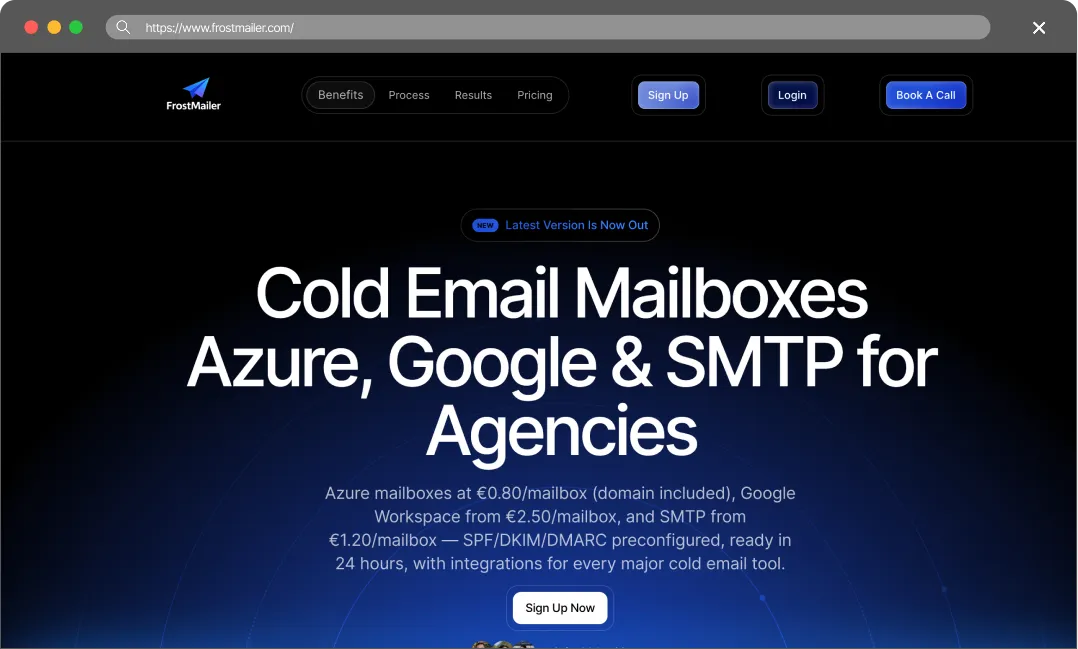
According to LinkedIn data, the company was founded in January 2024 by Eanna Fitzgerald, Jason Park, and James Shields. It is a cold email mailbox provider for agencies and outbound teams. Their official site lists three mailbox categories: Google Workspace, Standard SMTP Inbox, and Microsoft Azure Tenant.
FrostMailer says it preconfigures SPF, DKIM, and DMARC, manages DNS, redirects, forwarding, and inbox health monitoring, and allows teams to connect mailboxes to major cold email platforms. Its workflow is simple: sign up, complete an onboarding form, and get mailboxes configured quickly, with 24-48 hours stated for Google and 30 minutes for SMTP.
FrostMailer publishes a few public scale claims. The homepage states Trusted by 100+ businesses; it also claims that partners and agencies generated hundreds of meetings and over €3,000,000+ in revenue from cold outbound, but this should be treated as an official marketing claim rather than an independently verified metric.
The True Cost of Bad Deliverability
It’s tempting to choose a provider based solely on the lowest price, but budget infrastructure often leads to hidden costs. When deliverability drops, the consequences usually show up in three areas:
- Burned Leads: High-quality B2B data is expensive. If emails land in spam, those contacts never see the pitch, and the budget spent on data is lost.
- Damaged Domains: Fixing a domain flagged by spam filters can be a massive headache. Often, it’s easier to just buy a new one and start the warm-up process all over again.
- Missed Revenue: Every missed inbox is a missed meeting. In B2B sales, losing even one connection can mean missing out on thousands in closed revenue.
Cold email infrastructure is better viewed as an investment. Maildoso provides the technical tools to protect domain reputation and help keep emails in the primary inbox.
Final Thoughts
We strongly advise against using Azure tenants. Not only because they limit you to just 2 emails per day—which is 15 times less than the SMTP limit, making the effective cost per mailbox significantly higher—but also because of the reliability risk. We consistently hear reports of yet another Azure provider getting blocked, causing all customer mailboxes to be burned with no possibility of recovery.
As for Google Workspace (GW) and SMTP, they are worth a try. However, compared to Maildoso (where we also offer both GW and SMTP), our mailboxes are far more resilient thanks to IP rotation and our self-healing mailbox technology.
FAQ
What types of mailboxes do both tools provide?
Maildoso provides GW accounts (fully official, with a business license) and advanced SMTP with IP rotation. FrostMailer provides SMTP with shared IP, non-official GW, and non-reliable Azure tenants.
Is FrostMailer cheaper than Maildoso?
At first glance, it may seem that way. However, when you consider that Azure tenants only allow you to send 2 emails per day, the real cost of these mailboxes is significantly higher. Furthermore, these are the least reliable mailboxes possible—they get shadowbanned or blocked in massive batches. This means you’ll end up spending more on replacement mailboxes and new domains, plus another two weeks on the warmup process for the new mailboxes. There are no real savings here.
Which provider is safer for long-term scaling?
We strongly advise against using SMTP with shared IPs or any Azure tenant accounts. As for Google Workspace, we think they are worth testing.